A country church is rarely just a building. It is often the oldest structure for miles, built from whatever stone the parish could dig or haul, and repaired by every century since. Step through the porch and you are walking on the same flagstones that farm labourers, gentry and passing drovers have crossed for hundreds of years.
The good news is that most rural churches are open during daylight, welcoming casual visitors, walkers and anyone curious enough to push the door. The better news is that a little knowledge transforms the visit. You start noticing things: the blocked doorway, the scratched graffiti by the font, the yew tree older than the tower. Here is what to look for, and how to behave while you look.
Before You Set Off
Check that the church is normally open. Many rural parishes keep doors unlocked from morning until dusk, but some lock them because of theft or vandalism, and a few open only for services. Parish websites, local guidebooks and noticeboards at the gate usually say. If you are walking a long-distance footpath, treat a church as a possible shelter and water stop rather than a guaranteed one.
Dress for the weather and the ground. Churchyards are often uneven, with sunken graves and slippery moss on north-facing paths. Wear shoes with grip. Carry a torch in winter, since interiors can be genuinely dark, and bring binoculars if you want to read the carved detail high on the walls.
The Churchyard First
Walk the outside before you go in. The churchyard tells you as much as the building.
- The gate and path. Look at how the path approaches the door. Many old paths curve slightly, following a route older than the present building.
- The yew, lime or cedar. Big evergreen trees in churchyards are often very old, and yews in particular are frequently older than the church itself.
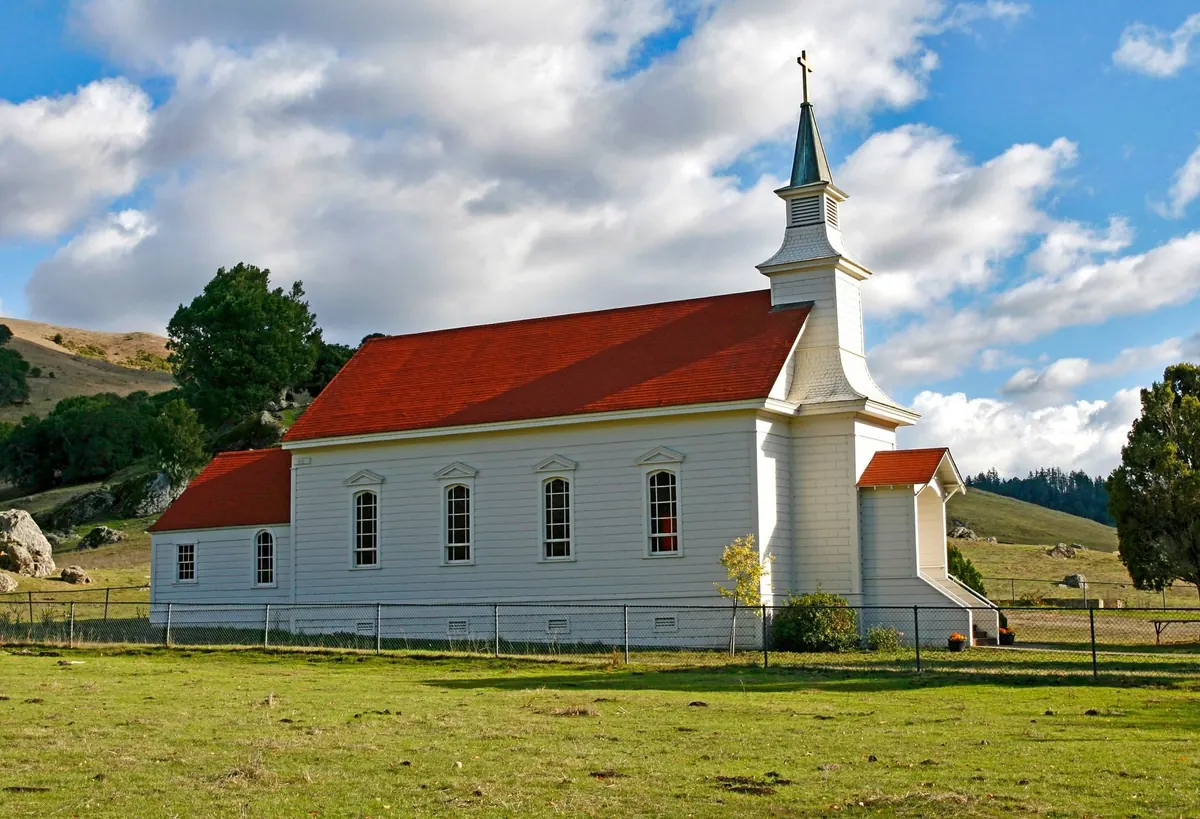
- The tower or spire. Towers are usually square and sturdy; spires are lighter and later in style. Note whether the tower has a clock, a louvred bell opening, or battlements.
- Gravestones. Earlier stones lean and face east. Victorian stones are more upright, more ornate, and often crowded along the boundary wall.
- The boundary. A raised bank, a low wall or a line of trees may mark a much older enclosure than the churchyard's current size suggests.
Read a few inscriptions. They are short biographies: a stonemason's spelling, a trade, an age, sometimes a whole family on one stone. Do not tidy anything, move flowers, or prop up a leaning stone for a photograph. Faded stones are fragile, and churchyards are active burial grounds, not heritage displays.
Inside: Where to Look
Push the door gently and pause. Let your eyes adjust; the contrast between bright churchyard and dim interior is part of the experience. Then work through the building in a rough circuit, from the back to the front, and notice these features.
The porch and door
The porch was often where business was done: weddings, deals, and the formal parts of a burial service. Look for scratch dials or crosses cut into the stone, and for ironwork on the door, which can be medieval.
The font
Usually near the entrance, because baptism marks entry into the church. Fonts are often the oldest object in the building, sometimes a plain tub shape, sometimes carved with crude faces or geometric panels. Look for a carved wooden cover, and for marks worn into the rim by generations of hands.
The nave and pews
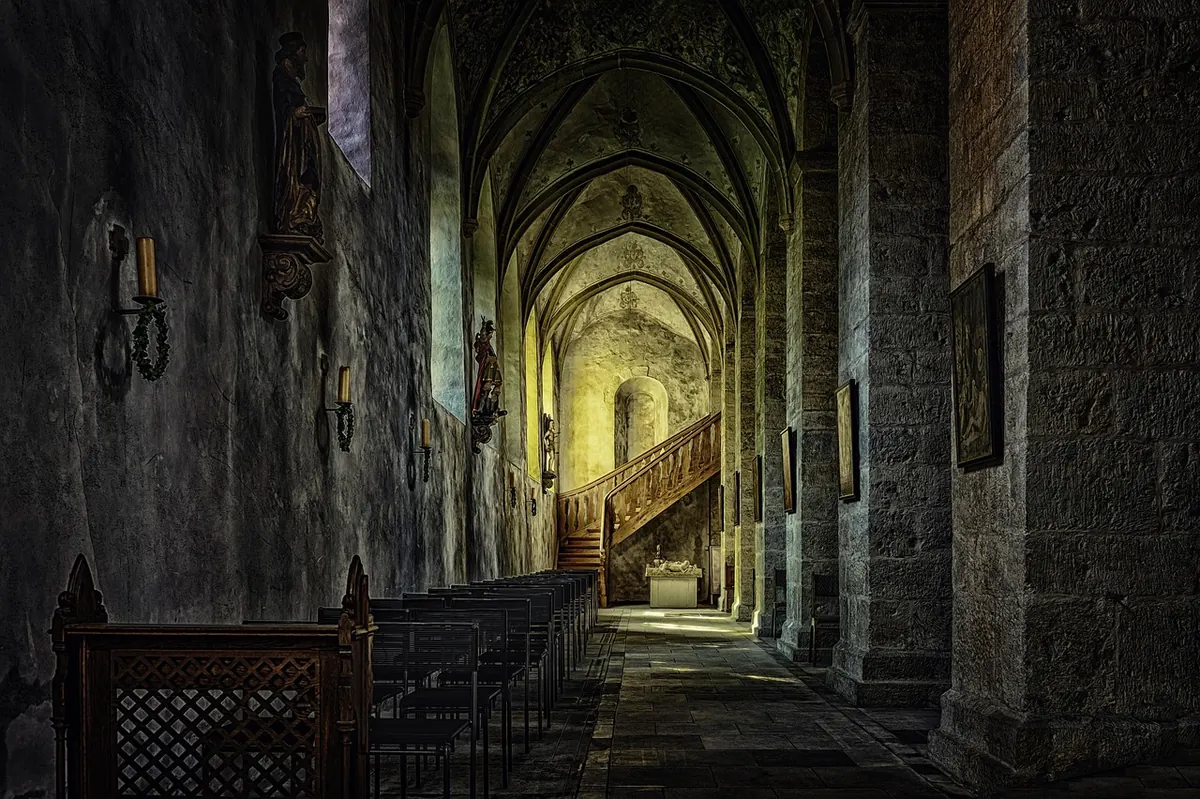
The main body of the church. Check the roof timbers, which may be original and smoke-blackened. Look at the pews: carved bench ends sometimes carry initials, dates, or a maker's mark. Box pews and high-sided family pews hint at a period when seating reflected social rank.
Walls, windows and traces of the past
Old churches are palimpsests. On the walls you may find:
- A blocked arch or doorway, usually visible as a change in stonework.
- Wall paintings, often faint, showing biblical scenes or texts.
- Memorial tablets and hatchments, the diamond-shaped painted boards of a family's arms.
- Scratched graffiti near the door or font, sometimes centuries old.
- Stained glass, with fragments of medieval glass reset in later windows.
Look up at the chancel arch, and note the step up into the chancel itself. That level change marks the division between the congregation's space and the priest's, and it survives in most parish churches.
Small things worth a second look
The lectern, the pulpit, the altar rail, the hymn board, the parish chest, the list of incumbents on the wall. Written records like those give a sense of continuity: a single parish can show forty names over six hundred years. Also look at the floor for brasses and ledger stones, worn smooth by foot traffic.
Etiquette for Visitors and Walkers
Country churches are working places of worship and, in many cases, still the quiet centre of a small community. A few habits keep them open to visitors.
- Close the door behind you to keep out weather and wildlife, unless a notice says otherwise.
- Keep noise low. Sound carries oddly in stone buildings; a normal conversation can be heard across the nave.
- Do not walk in the chancel unless invited, and never step behind the altar.
- Leave everything where it is. No moving hassocks, hymn books, flowers or kneelers.
- Ask before photographing people or during a service, and check whether flash is allowed; it can damage textiles and paintings.
- Keep dogs outside unless the church is known to allow them, and keep them on a lead in the churchyard.
- Take litter home, including fruit peel and dog bags, and shut gates so livestock stay put.
- Give way to mourners and wedding parties. If a service or a burial is beginning, leave quietly and come back another day.
If you find the door locked, do not force anything or climb over a wall. Note the contact details on the noticeboard and ask about visiting another time.
Practical Tips and a Closing Thought
Allow twenty minutes for a small church, an hour for a large one with plenty to read. Take a notebook, or use your phone's notes app, and jot down names, dates and curious details; you will forget them otherwise. A small donation in the box is welcome and helps with the constant cost of maintaining old roofs, gutters and heating.
Buy the guidebook if there is one. Parish guides are usually written by people who know the building intimately, and they point out details you would otherwise walk straight past. If a volunteer is on duty, ask what they find most interesting; that conversation is often the best part of the visit.
Finally, remember that these buildings have survived because each generation found a use for them. Whether you come for the architecture, the family history, the quiet, or simply a dry spot on a wet walk, you are adding another set of footsteps to a very long line. Walk gently, look closely, and leave the door as you found it.
Photo: Pixabay / Pexels