A hedgerow is not a fence with leaves on it. It is a queue of plants, each doing something at a different moment: blackthorn flowering first, hawthorn following, hazel catkins before either, ivy saving its nectar until autumn. Behind that sequence runs a second timetable of birds, mammals and insects that use each stage in turn. The trick with hedges is not to travel further but to look more often, at the same stretch, until you can see what has changed. Here is what to expect through the year.
Reading a Hedge Before You Look for Wildlife
Hedges are layered, and the life in them is not evenly spread. Once you know which layer you are looking at, you know roughly what you should be finding.
- Verge: the rough strip at ground level — cow parsley, nettles, cuckooflower, tussocky grass. Small mammals move here, and butterflies come for nectar.
- Base: the bank, leaf litter and mossy tussocks. Look for runs and tunnels through the grass, the low, domed nests of wrens, and beetles sheltering under dead wood.
- Middle: bramble, honeysuckle, dog rose and hazel. This is the nesting storey, and where most of the summer song comes from.
- Top: hawthorn, blackthorn, field maple, and often an old ash or oak standard left behind by the last hedge-layer. Song posts, blossom and most of the berries.
A hedge with a good range of woody species is usually older than one with two or three, and older hedges are generally richer in wildlife. If you can identify five or more shrubs in a stretch, slow down. You are looking at a piece of countryside with some history in it.
Spring: Blossom, Song and the First Nests
March belongs to blackthorn. Its creamy-white flowers open on bare, dark stems before any leaves appear, which makes them easy to spot along a lane. Hazel catkins hang like small lambs' tails, and on the first mild afternoons bumblebees work the willow and blackthorn. Chiffchaffs start singing towards the end of the month — two or three notes, then a pause, then the same again.
April brings hawthorn into leaf. Pinch one and you will smell why country children called it bread and cheese. Orange-tip butterflies appear along the verge, laying eggs on cuckooflower and garlic mustard, and whitethroats arrive to sing their scratchy, impatient song from the top of the hedge.
May is the loud month. Hawthorn blossom covers the hedge in cream, cow parsley foams along the verge, and nests are in use everywhere: blackbird, song thrush, dunnock, robin, blue tit, whitethroat. A sharp tack-tack-tack is usually a bird telling you to move on. Do exactly that, quickly and quietly. In most places the nests and eggs of wild birds are legally protected while in use, so watching from a distance with binoculars is both kinder and safer than leaning in for a look.
Early Summer: A Nursery in the Leaves
June is when the hedge feeds its own. Elderflowers open, dog roses come out, and honeysuckle scents the evenings. Fledglings — round, short-tailed and hopeless-looking — sit in the middle of the hedge while parents shuttle back and forth with caterpillars.
July brings bramble into flower, and with it a crowd: bumblebees, honeybees, hoverflies, gatekeepers and meadow browns along the sunny side. Watch for family parties of long-tailed tits and warblers working a hedge like a slow wave, one bird after another, moving from gate to gate. On warm evenings, stand still at dusk and you may catch a pipistrelle bat hunting up and down the line of the hedge.
Late Summer and Autumn: Berries, Seeds and Passage Birds
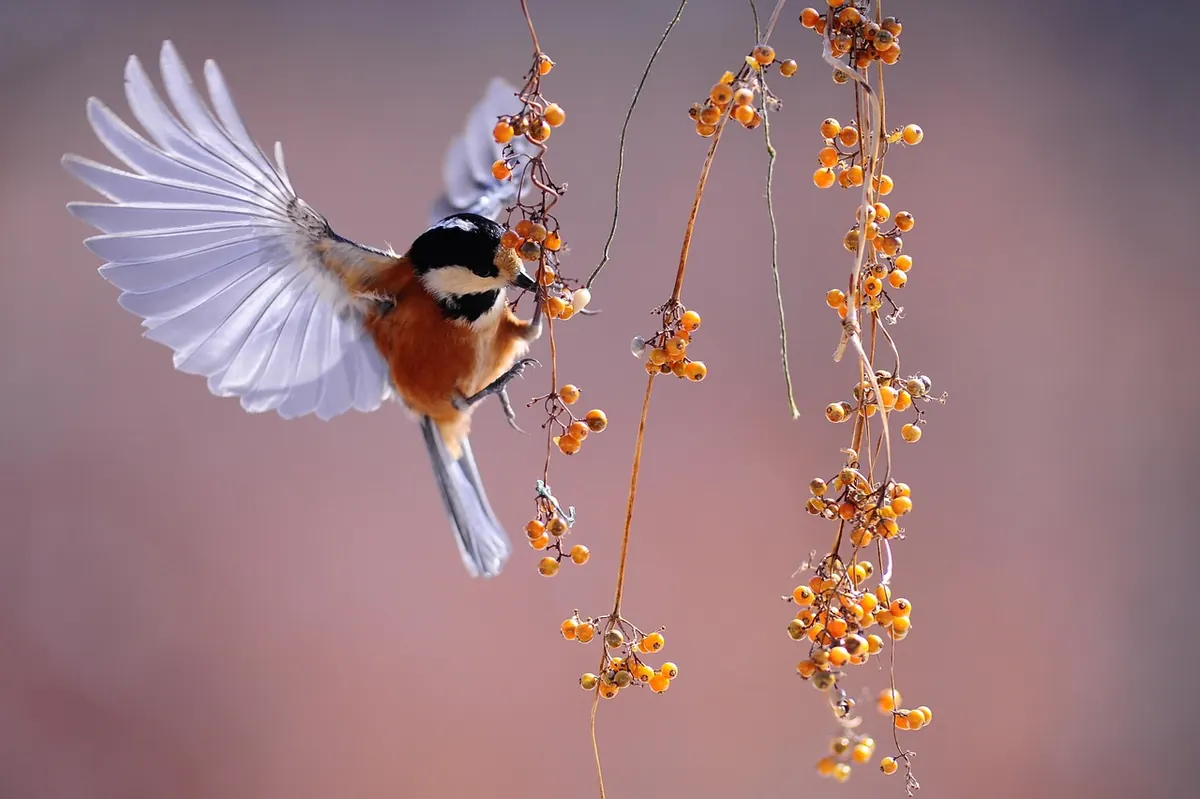
August starts the fruit. Haws redden, rose hips fatten, sloes dust up blue-black on the blackthorn. The hedge that was a nursery in June becomes a larder.
September is blackberry month, and elderberries hang in dark, heavy sprays. Ivy, easy to overlook, comes into flower now and is one of the best late nectar sources in the countryside — look for red admirals, commas and a lot of hoverflies on it.
October and November bring movement. Redwings and fieldfares arrive from Scandinavia, often with the first cold snap, and strip a berry hedge in a few days. Watch a heavy hawthorn crop and you may find a flock working it steadily, dropping to the field to feed between raids. Once the leaves fall, the hedge shows its bones: you can see the layered structure, and often the old nests you walked past all summer.
Winter: Thrushes, Finches and Frost
A frosty morning is the best time to walk a berry hedge. December and January are the lean months, and anything still holding fruit will be busy. Mixed flocks of tits, goldcrests and, in some years, redpolls or siskins drift along the hedgerows feeding on seeds. Ivy berries, which ripen late, keep blackbirds going when most other food has gone.
Look at the ground as well as the hedge. After rain, the muddy gateway and the field margin show you what has been past: badger tracks, fox prints, the neat two-dot pattern of a stoat. Under a hazel hedge, hunt through the fallen nuts. A round hole with a smooth, neat rim suggests a dormouse has been at work; a hole with tooth marks scratched around the edge is more likely a wood mouse or grey squirrel.
February is quiet but not silent. Hazel catkins are open again, song thrushes begin to sing from a favoured tree, and mistle thrushes — storm cocks — sing from high branches in rough weather. The year is already turning over.
Watching Well: Timing, Kit and Etiquette
- Go early. The hour after dawn in April and May gives you the full chorus. Hedges are quieter after nine in the morning.
- Choose the weather. Mild, calm, slightly overcast mornings are often better than bright, windy ones.
- Carry binoculars. Anything from 8x32 upwards is fine. Close focus matters more than magnification for hedgerow work.
- Dress quietly and avoid bright colours. Walk slowly, stop often, and use your ears before your eyes.
- Use the sunny side. A south-facing hedge is warmer, holds more insects and usually more birds.
- Keep dogs close near livestock and near nesting cover in spring, and stick to footpaths, gates and stiles.
A little restraint pays off. Stand back from the hedge rather than pressing into it, and never handle nests, eggs or young birds. Half an hour of patient, boring-looking standing about usually beats a brisk walk for what you actually see.
Making a Habit of It
Pick two or three hedges you pass regularly — on the school run, the dog walk, the road to work — and visit them on the same route through the year. Keep a short note of firsts: first blackthorn flower, first chiffchaff, first ripe blackberry, first redwing. Nothing elaborate; a line in a notebook or a note on your phone is enough.
The same hedge watched across twelve months will teach you more than a dozen visits to somewhere new. You will learn where the wrens nest, which gap the bats use, which tree the thrush sings from, and roughly when the berries go. That knowledge is the real pleasure of it — and it is free, local, and waiting a few minutes from your door.
Photo: homecare119 / Pixabay