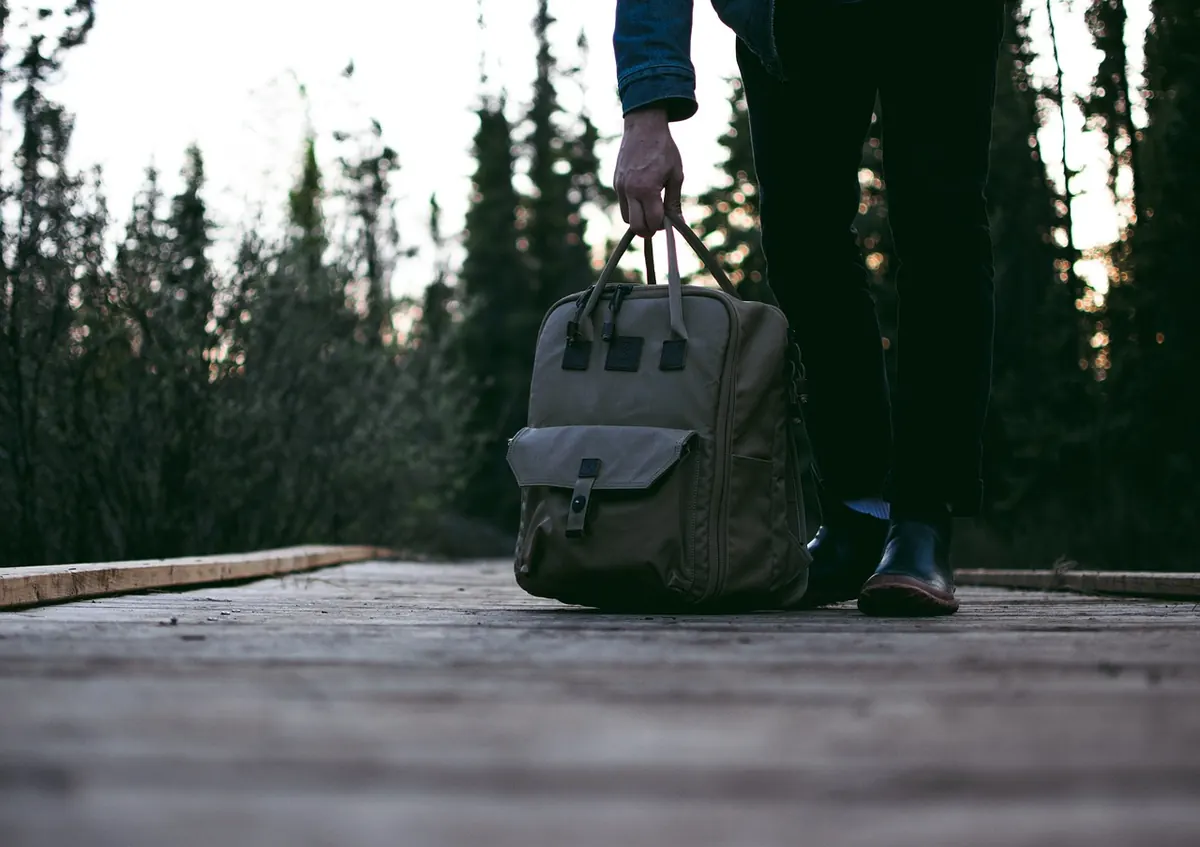
The best half-day walks often start with a door closing and almost no plan. Four hours later you are squelching along a lane in wet socks, watching cloud drop onto the ridge you meant to cross. Nothing about that is dangerous. It is just unnecessary, because a small bag with the right things in it would have fixed it.
A half-day ramble is short enough to feel spontaneous and long enough to go wrong. The weather can change twice, a missed turning can add an hour, and a sunny start tells you very little about the top of the hill. Here is what to carry.
Start with your feet
Two hours of walking is a long time for the wrong shoes. Boots and trail shoes both work; what matters is grip, fit and a little room for your toes on descents. A chunky tread does more for you than a high ankle collar on the ground most half-day walks cover: muddy field edges, gravel tracks, wet grass on a slope. If the route includes a rocky scramble or a long, steep descent, a stiffer sole will feel kinder by the end; if it is mostly lanes and towpaths, a light trail shoe is plenty.
Socks matter as much as footwear. Wool or synthetic socks keep their cushioning when damp; cotton holds water against the skin and is the quickest route to a blister. Carry a spare pair in a plastic bag. Changing socks halfway can rescue a walk that was already turning sour. A few blister plasters in your pocket weigh nothing and can save the last hour.
If your boots have been in the shed since spring, wear them on a short local walk first. Check the laces, too. A double knot takes seconds and stops the mid-walk stop to retie a lace that has been slapping mud up your back for a mile.
Layers you can add and remove
Three thin layers beat one thick one, because you can shed them one at a time as you warm up and put them back on when you stop. The aim is to stay dry on the inside and block the wind on the outside. A valley can be still and mild while the ridge above it is two degrees colder with a wind that cuts through a single fleece.
- Base layer — synthetic or merino rather than cotton.
- Mid layer — a light fleece or thin insulated jacket for stops and shaded valleys.
- Outer layer — a windproof, waterproof shell with a hood.
Add a hat and thin gloves in winter, a sun hat in summer. These are the things people leave behind and then wish for at the highest point of the walk, where it is almost always colder than it was at the car park.
A dry spare mid layer stays in the bag, not on your body. A buff or scarf does three jobs: neck warmer, headband, sweat rag. Lightweight over-trousers take up less space than a spare jacket and keep the wind off wet legs. If rain is forecast, put the shell in the top of your pack, not at the bottom under your lunch.
Water, food and the last mile
For a half-day in mild weather, a litre of water per person is a reasonable starting point, and more on a hot day or a hilly route. Do not count on finding a refill; village shops and pubs are not always open when you pass. On a warm day, sipping little and often beats gulping a pint at the halfway point, and a soft flask or bottle you can reach without stopping keeps the habit easy.
Eat before you are hungry, ideally somewhere with a view. A sandwich, oatcakes, nuts, a banana and something with sugar for the final climb will carry you through four hours comfortably. In cold weather a flask of tea or soup does more for morale than any snack. The last mile is often the one that turns a good walk into a drag: it is uphill back to the car park, the children have gone quiet, and the sugar you left at home is no use to anyone.
Keep food and water where you can reach them without taking the pack off. Snacks buried under a waterproof jacket tend to stay there. Pack out everything you bring in, including fruit peel and wrappers that can blow away from an open pocket.
Navigation: two ways to know where you are
Carry two independent ways of knowing where you are and where the car is parked. Phone signal in valleys, woods and deep lanes is unreliable, so a phone alone is not a plan.
- Download an offline map of the area before you leave home, and start with a full battery.
- Take a paper map at 1:25,000, the scale that shows footpaths and field boundaries, and know how to read it.
- Tell someone your route and when you expect to be back.
- Find the first turning on the map before you set off, so you start the walk already oriented.
A small power bank is worth its weight if you are using the phone for navigation, photos or emergencies. Keep it in a dry bag with a short cable, and resist the temptation to drain the battery on music or videos at the start. A compass is a useful backup if you know how to take a bearing, but even without one, matching the map to the shape of the land around you is a skill worth practising on every walk.
Safety, weather and the small stuff
The little items are the ones that turn a minor annoyance into a memorable problem. A half-day walk does not need a full expedition kit, but it does need a few things that live in the bottom of the bag and only come out when required.
- First aid: blister plasters, a few adhesive plasters, painkillers, and any personal medication.
- Light: a small head torch or a phone light, because a leisurely afternoon can become a dusk walk if you stop for lunch and lose track of time.
- Warmth: a foil emergency blanket takes up almost no space and weighs very little.
- Weather: sun cream, lip balm and insect repellent in summer; a spare hat and gloves in winter.
- Practical: tissues, hand sanitiser, a small dry bag for phone and keys, and a little cash for an honesty box or a pub stop.
Check the forecast for the area you are walking, not just the town you leave from. Wind chill on an exposed ridge can make a mild day feel bitter, and heavy rain can turn a pleasant path into a slippery stream. If the weather is genuinely severe, save the route for another day; a half-day walk is meant to be a pleasure, not a test.